
Few questions come up faster after an injury than how long the boot stays on. The honest answer comes from your doctor, not from a general number.
The short answer
Your doctor sets the length. The NHS says the doctor will tell you how long you will have to wear a boot or plaster cast, and how much weight to put on your ankle.
That means any number you hear from a friend is a guess about someone else's injury.
What the boot is doing
The Cleveland Clinic says you will most likely have to wear some type of cast, splint or a specially designed boot or shoe to protect your foot from further injury as the broken bone heals.
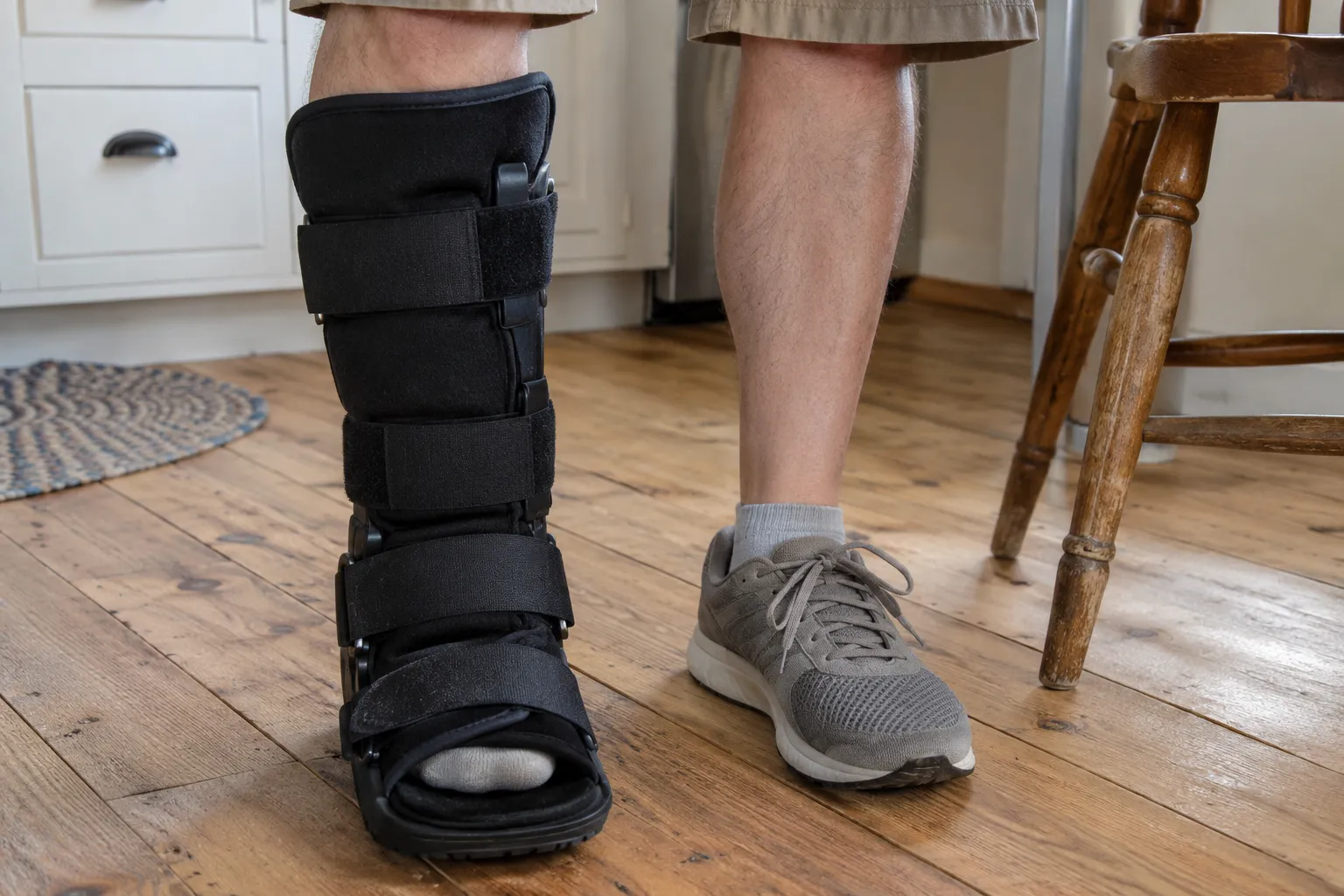
The boot is protection for a healing bone. Taking it off early because the foot feels better is the common mistake, and the decision belongs to your doctor.
Three questions for the boot visit
Ask three things at the visit: how long the boot stays on, how much weight you can put on the foot, and whether you need crutches or a physiotherapist. The NHS lists these as things the doctor will tell you.
If the boot or the pain changes before your next visit, call the office instead of adjusting the plan yourself.
For more on how ankle fractures are handled in older adults, see Management of Geriatric Ankle Fractures. A related paper builds a nomogram for predicting deep vein thrombosis after lower limb fracture surgery in elderly patients.
A calm last word
The boot is dull, and a dull recovery is the goal. Follow the end date your doctor gives you, and ask again if you do not understand it.